How Much Does a Customs Broker Cost in India? Complete Fee Guide
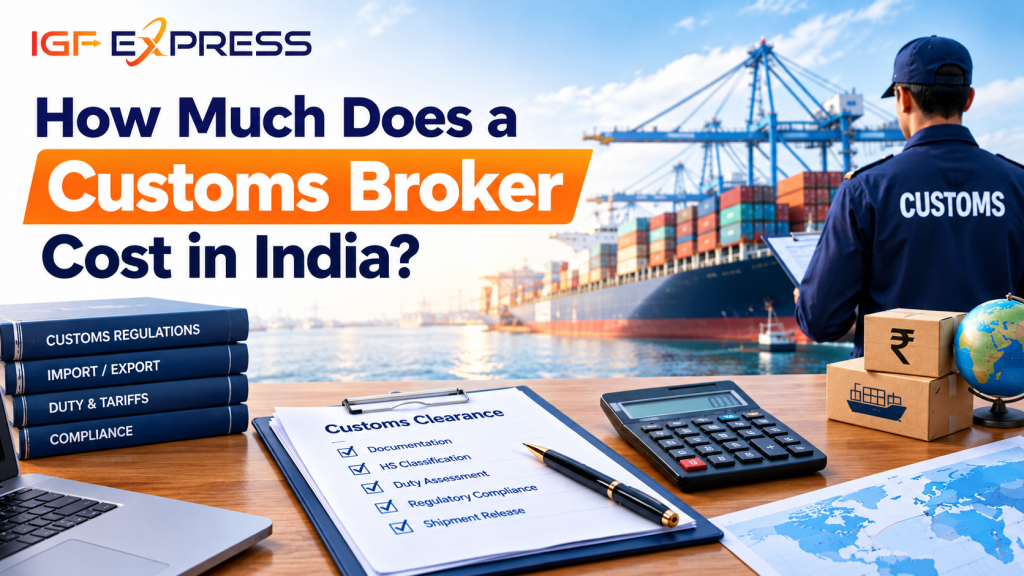
Choosing a customs broker is an important decision for any business involved in international trade. From documentation and customs declarations to duty assessment and regulatory compliance, the quality of customs support can influence how smoothly imported goods move through the clearance process.
For importers, the challenge is not simply finding a service provider who can file documents. It is finding a professional who understands the nature of the cargo, identifies compliance requirements early, communicates clearly and helps prevent avoidable delays.
This guide explains what a customs broker does, how to evaluate service providers and what businesses should consider before choosing a customs clearance partner in India.
What Does a Customs Broker Do?
A customs broker acts as an intermediary between importers or exporters and customs authorities. Their role involves facilitating customs procedures, preparing and submitting relevant declarations, coordinating documentation and supporting compliance with applicable customs regulations.
Depending on the shipment and agreed scope of work, services may include:
- Bill of Entry and Shipping Bill documentation and filing.
- Customs duty assessment coordination.
- HS code classification support.
- Customs valuation and transaction-related documentation.
- Coordination for examination, queries and assessment.
- Support with applicable product-specific permissions and regulatory requirements.
- Coordination with freight forwarders, transporters, warehouses and other stakeholders.
- Assistance with shipment release and delivery planning.
The scope of service can vary depending on the cargo, port, regulatory requirements and individual business needs. Importers should confirm exactly what is included before engaging a broker.
Why Choosing the Right Customs Broker Matters
Customs clearance involves more than submitting a declaration. Information provided in the Bill of Entry must align with commercial documents, product details, valuation information and applicable regulatory requirements.
An error or inconsistency may lead to customs queries, additional documentation requests, examination or delays in cargo release. In some cases, incorrect classification or incomplete compliance can also create financial and regulatory risks.
An experienced customs broker in India can help businesses identify potential issues before filing, coordinate the necessary documents and manage communication throughout the clearance process.
For companies handling frequent imports, machinery, electronics, chemicals or other regulated goods, this support can be particularly important. Requirements should be assessed shipment by shipment rather than assuming every consignment follows the same process.
Key Factors to Consider When Selecting a Customs Broker in India
1. Verify the Customs Broker’s Licence
Before appointing a service provider, verify that the customs broker holds the appropriate licence and is authorised to undertake the proposed work under applicable regulations.
Businesses searching for a licensed customs broker India should check the provider’s credentials, relevant authorisation and operational experience. Licensing is a fundamental starting point, but it should be considered alongside service quality, compliance practices and the ability to handle the specific type of cargo.
A business should also establish which entity will actually handle its customs declarations and who will be responsible for coordination if a shipment encounters an issue.
2. Evaluate Experience with Your Cargo and Industry
Not all imports have the same requirements. General merchandise, industrial machinery, automotive components, electronic equipment and chemical products may involve different classification, valuation and regulatory considerations.
Ask whether the broker has handled similar shipments and understands the documentation commonly required for your product category.
For example, machinery imports may require detailed product specifications, invoice analysis and careful classification. Certain electronics or industrial products may require checks for applicable BIS requirements or Quality Control Orders. Chemical and hazardous shipments may involve additional transport and handling considerations.
Industry-specific experience can help identify potential issues earlier, although final requirements depend on the product, its classification and the regulations in force.
3. Look Beyond the Quoted Fee
Price matters, but the lowest quotation does not always represent the lowest overall cost.
A customs broker’s quotation may cover only professional clearance fees, while other expenses such as terminal charges, examination-related costs, transport, storage or additional documentation support may be billed separately.
Before confirming a quotation, ask for a clear breakdown of:
- Professional customs clearance fees.
- Documentation and filing charges.
- Examination or special handling costs, where applicable.
- Transportation and delivery charges, if included.
- Additional fees for queries, amendments or other work outside the agreed scope.
A transparent quotation helps procurement and finance teams compare providers fairly and budget for the complete shipment rather than just one service component.
4. Assess Documentation and Compliance Practices
Reliable customs clearance begins before a shipment arrives. Importers should expect their broker to review the available documents and flag apparent inconsistencies or missing information.
Depending on the shipment, documents may include the commercial invoice, packing list, bill of lading or airway bill, certificate of origin, product specifications, licences and other supporting records.
Pay particular attention to the following areas:
- HS code classification: The classification should reflect the product’s actual characteristics and applicable tariff rules.
- Customs valuation: The declared value must be supported by relevant transaction and cost information under applicable valuation rules.
- Import policy: Check whether the product is freely importable, restricted or subject to specific conditions.
- Product compliance: Identify any applicable certification, registration or regulatory requirements before shipment.
- Document consistency: Product descriptions, quantities, values and other particulars should align across relevant records.
A broker should not simply accept incomplete information without raising questions. Importers also remain responsible for providing accurate information and supporting documents.
5. Check Communication and Query Management
A customs query can create uncertainty when no one knows what information is required, who must provide it or how it affects the shipment timeline.
Before appointing a broker, understand how updates will be shared, who will be your point of contact and how assessment queries or documentation issues will be escalated.
For regular importers, a defined communication process can be as important as the filing process itself. Clear updates help teams coordinate inventory planning, warehouse capacity, production schedules and onward transportation.
6. Consider End-to-End Logistics Coordination
Customs clearance is one part of the import journey. Freight movement, port handling, documentation, customs release and final delivery must work together.
Businesses that coordinate these activities across multiple providers may face communication gaps or difficulty determining where a delay has occurred.
Depending on their requirements, importers may benefit from working with a customs broker that can also coordinate freight forwarding, transportation, warehousing and related logistics services. The objective is not simply to combine services, but to establish clear responsibilities and better shipment visibility.
What Makes the Best Customs Broker in India for Your Business?
The best customs broker in India is not necessarily the largest provider or the one offering the lowest price. The right choice depends on the company’s import profile, cargo complexity, shipment frequency, locations served and need for additional logistics support.
A practical evaluation should include:
- Valid licensing and relevant credentials.
- Experience with similar cargo and regulatory requirements.
- Transparent pricing and clearly defined responsibilities.
- Strong documentation and compliance processes.
- Responsive communication and query handling.
- Coordination with freight and delivery partners.
- The ability to scale support as shipment volumes grow.
Businesses searching online for India’s most trusted customs broker should evaluate providers against these verifiable factors instead of relying on promotional claims alone. References, documented processes, relevant experience and clarity around service commitments can provide a more useful basis for comparison.
Common Mistakes Importers Should Avoid
Even when a business works with an experienced broker, certain decisions can create avoidable clearance problems.
Sending documents too late: Delayed invoices, product specifications or supporting certificates can slow preparation and filing.
Using generic product descriptions: Descriptions that lack sufficient technical detail may make classification and assessment more difficult.
Assuming every product has the same compliance requirements: Product-specific rules can change the documents or permissions required for import.
Choosing solely on price: A low initial fee may not include query handling, amendments or additional coordination.
Booking shipment before checking import requirements: Where permissions or certifications apply, discovering them after cargo dispatch may create significant complications.
Leaving no time for queries: Import schedules should allow for assessment, examination or additional documentation if required.
Early coordination between the importer, supplier, freight forwarder and customs broker can reduce these risks.
How IGF Express Supports Importers
At IGF Express, customs clearance is approached as part of the wider international logistics process. Support includes customs documentation coordination, clearance requirements, valuation-related matters and freight and logistics coordination based on the shipment’s needs.
For importers, the priority is to understand the cargo, review the available information, identify relevant compliance considerations and coordinate the steps required for clearance and onward movement.
Businesses can learn more about IGF Express and its services at https://igfexpress.com/.
Frequently Asked Questions
How do I find a customs broker in India?
Start by checking licensing, relevant cargo experience, service scope, pricing transparency and communication practices. Confirm that the provider can support the ports, shipment types and regulatory requirements relevant to your business.
Why should I choose a licensed customs broker in India?
A valid licence is an important requirement for authorised customs brokerage work. It helps establish that the provider meets the applicable regulatory framework. Businesses should also assess the provider’s experience, processes and ability to manage their specific shipments.
Is the cheapest customs broker always the best option?
No. Compare the complete scope of work and the potential additional charges, not just the initial professional fee. Documentation quality, responsiveness and relevant experience can also affect the overall cost and efficiency of a shipment.
What information should I provide to my customs broker?
Typically, you should provide accurate commercial invoices, packing lists, transport documents, detailed product descriptions, technical specifications where relevant and any applicable licences or certificates. The exact requirements depend on the goods and import regulations.
How can I assess whether a customs broker is trustworthy?
Review its licensing, relevant experience, references where available, documentation practices, pricing structure and communication process. Avoid relying solely on unverified superlatives such as “most trusted”; look for evidence of professional capability and clear service commitments.
Conclusion
Choosing a customs broker is a decision that can affect compliance, shipment planning and the overall predictability of international trade operations. Businesses should assess more than price: licensing, cargo-specific expertise, documentation quality, communication and coordination all deserve careful consideration.
Whether you are comparing providers for occasional imports or seeking a long-term logistics partner, a structured evaluation can help you choose a customs broker in India whose capabilities match your business requirements.