ODC Cargo vs Break Bulk vs Project Cargo: Key Differences Explained
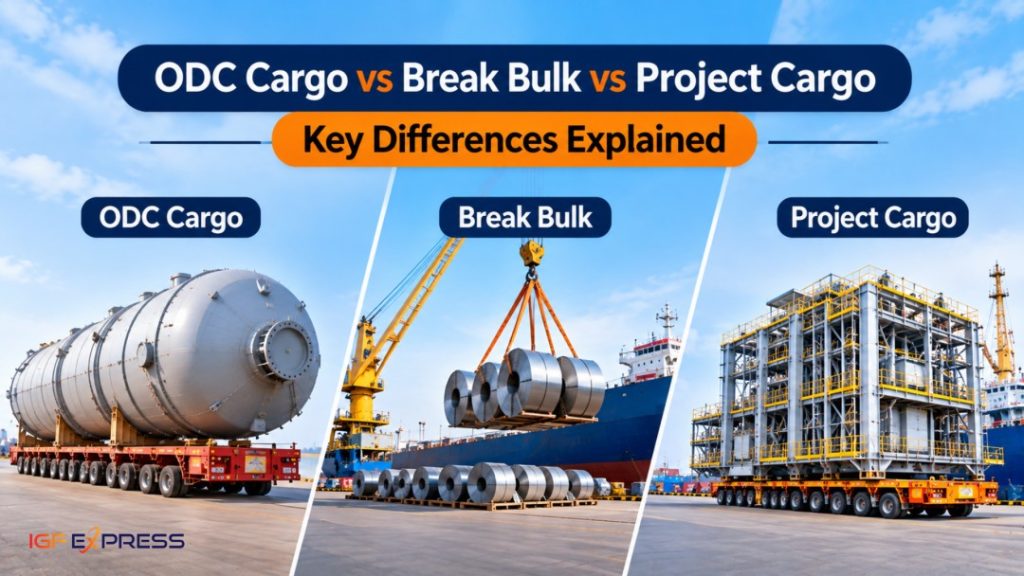
ODC Cargo vs Break Bulk vs Project Cargo: Key Differences Explained Moving industrial equipment, oversized machinery and heavy engineering components requires a different level of logistics planning from conventional freight transportation. A shipment that exceeds standard container dimensions, involves exceptional weight or requires specialised lifting arrangements cannot be managed through routine freight booking alone. This is where three important logistics concepts come into play: Over Dimensional Cargo (ODC), break bulk cargo and project cargo. Although these terms are frequently used interchangeably, they describe different aspects of cargo transportation. ODC primarily concerns dimensional limitations, break bulk describes the method of cargo handling and shipment, while project cargo refers to the wider logistics operation associated with a specific industrial or infrastructure project. Understanding these distinctions is essential for EPC contractors, manufacturers, power and energy companies, infrastructure developers and businesses transporting heavy industrial equipment. This guide explains how these cargo categories differ, the transportation challenges involved and what businesses should evaluate before selecting a logistics solution. What Is ODC Cargo? Over Dimensional Cargo (ODC) refers to cargo whose dimensions exceed the permissible limits of standard transportation equipment, infrastructure or movement regulations. In India, ODC requirements vary depending on the transportation mode and applicable regulations. For road transportation, oversized indivisible loads may require specialised trailers, route assessment and relevant permissions. For rail transportation, an Over-Dimensional Consignment is assessed against prescribed standard moving dimensions and clearances along the proposed route. Typical ODC shipments include: Industrial transformers Pressure vessels and reactors Large generators Heavy construction machinery Wind turbine components Industrial boilers Oversized manufacturing equipment The challenge is not simply the size of the cargo. Its weight distribution, centre of gravity, lifting points and physical dimensions determine the equipment and handling arrangements required. Key Considerations in ODC Transportation Route feasibility: Bridges, tunnels, overhead electrical lines, road width, turning radius and height restrictions must be evaluated before transportation. Trailer selection: Depending on the cargo, hydraulic axle-line trailers, modular trailers, extendable trailers or other specialised equipment may be required. Movement permissions: Applicable road, rail and local authority permissions must be obtained before movement. Load engineering: Weight distribution, axle loading, securing arrangements and stability must be assessed to reduce transportation risks. In particular, Indian Railways require prior sanction for the movement of consignments exceeding prescribed moving dimensions. The route and available clearances are important considerations in determining whether a load can be transported safely. For businesses seeking ODC Cargo Logistics India, the most important planning decision is establishing whether the proposed route and transportation equipment can accommodate the actual cargo dimensions and weight. What Is Break Bulk Cargo? Break bulk cargo refers to goods transported individually or in separate packages rather than as standard containerised units or loose bulk commodities. Unlike container freight, where cargo is consolidated into standardised units, bulk shipments are handled as individual pieces using cranes, lifting equipment and specialised cargo-handling arrangements. Common examples include: Steel structures and fabrication assemblies Industrial pipes and heavy machinery Boilers and pressure vessels Large equipment modules Bridge components Generators and turbines Construction materials Break bulk transportation is particularly relevant when cargo cannot practically be accommodated inside standard containers or when individual handling provides a more suitable shipping arrangement. How Break Bulk Cargo Is Handled The process generally involves several specialised activities: Cargo preparation: Each piece is inspected, measured, weighed and prepared for transportation. Suitable packing, protection and identification are important. Port handling: Cranes, lifting beams, spreader arrangements and other equipment are selected according to cargo weight and lifting configuration. Vessel planning: Cargo placement must consider available deck or hold space, loading sequence, weight distribution and accessibility during discharge. Lashing and securing: Cargo must be secured against movement during vessel operations and the voyage. The arrangement should account for expected transportation forces and cargo-specific requirements. Discharge and inland movement: At the destination port, cargo is unloaded and transferred using suitable trailers, lifting arrangements or other transport modes. Unlike conventional containerised freight, individual break bulk units require dedicated handling and securing arrangements. This makes port selection, equipment availability and loading coordination particularly important. For companies handling industrial shipments, break bulk cargo logistics India requires close coordination between the exporter, shipping line, port operator, cargo surveyor and inland transportation team. What Is Project Cargo? Project cargo is a broader logistics category covering the transportation and coordination of equipment, machinery, structures and materials required for a specific industrial, energy or infrastructure project. Unlike a routine freight movement, project cargo is generally planned around the requirements and construction schedule of an entire project. Examples include: Power plant equipment and turbines Oil and gas processing modules Refinery equipment Wind energy components Metro and railway infrastructure Industrial plant machinery Large transformers and generators Mining and heavy engineering equipment A project shipment may involve hundreds of individual cargo pieces, multiple suppliers, different loading locations and several transportation modes. Some components may move in standard containers, while others require flat racks, open-top containers, break bulk vessels or specialised heavy-lift arrangements. What Makes Project Cargo Different? Project-specific planning: Transportation is designed around the project’s installation schedule, delivery sequence and site requirements. Multimodal coordination: Cargo may move through road, rail, sea, inland waterways and other transportation networks. Engineering assessment: Large or heavy components require detailed lifting studies, load calculations, equipment selection and securing plans. Site readiness: Delivery planning must consider access roads, unloading areas, ground-bearing capacity, crane availability and installation requirements. Documentation and compliance: Customs declarations, permits, cargo specifications, insurance and regulatory approvals must be coordinated across the shipment lifecycle. Effective project cargo logistics services therefore involve much more than arranging transportation for oversized goods. They require the coordination of engineering, freight, customs, port operations and final delivery. ODC vs Break Bulk vs Project Cargo: Understanding the Differences Although ODC cargo, break bulk cargo and project cargo are closely related, each serves a different purpose in specialised logistics. ODC cargo is primarily defined by its dimensions and the transportation limitations it creates. Break bulk cargo refers to the method of shipping and handling individual cargo units rather than transporting them in